 admin
admin


How Many Yards To Slipcover Chair
When making sofa covers for chairs, you usually need 2 to 9 yards of fabric. The exact amount depends on the outline of the chair and your requirements for details: a regular dining chair is usually 2-3 yards; a deep-seated club chair is about 5-7 yards; and a high-backed dormer chair is usually 7-9 yards.
These estimates cover the main frame, removable seat cushion, and standard seam allowances. But in my experience over the years sitting in front of a sewing machine, if the fabric you choose has a large loop pattern that requires flowers, or you’re planning on adding a crinkled skirt or piping, I highly recommend buying an extra 15% to 20% of the margin on top of the calculated one. This “safety yardage” is very important to help you avoid the most common DIY pit —— running out of fabric and then restocking it, only to find that the new batch of fabric has color differences from the original.
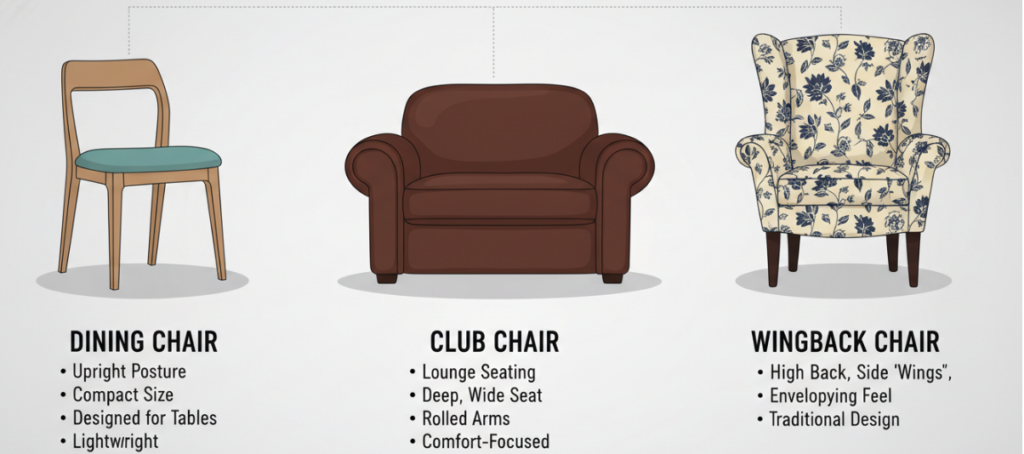
Estimated yardage based on chair type
The outline of the chair is the first factor in deciding how much cloth to buy. Most trim cloth door panels on the market have a standard 54-inch door, so here are my detailed usage summaries for three common chair types:
1. Dining Chairs (2–3 yards)
Dining chairs are an entry-level project. The regular Parsons chair or simple armless side chair is the most economical. If you’re only carrying a seat bag, you won’t need much; but if you’re going to carry an all-inclusive model that goes all the way from the back of the chair to the ground, you’ll have to have a full 3 yards to cover all the cuts on the front, back, and sides.
2. Club Chair (5–7 yards)
The club chair is characterized by a deep sitting depth and rounded armrests. Because these chairs usually have a separate and thick base pad, the yardage will increase significantly. In addition to the fabric for the chair body (frame), you also have to include the fabric for the seat cushion cover and sides.
3. Dormer/Spreader Chair (7–9 yards)
Due to its height and complex geometry, the dormer chair is a true “cloth eater”. The “ears” on the sides of the chair, the high backrest and the armrests, which are usually curved, create a lot of corner waste during the cutting process. If your chair comes with a T-seat cushion, or you want to make a deep pleated skirt, go straight up to size 9 and get ready.
Several Key Factors That Can Cause Usage To Surge
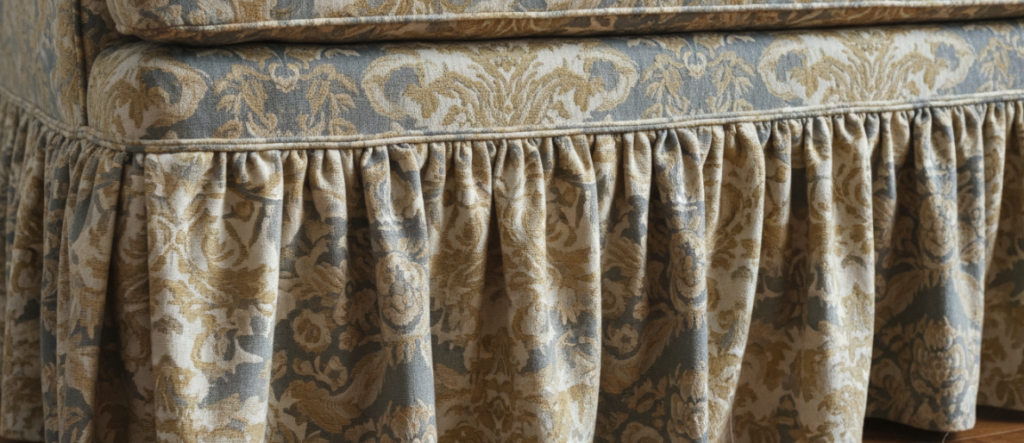
While basic measurements can give you a starting price, some design details can quickly deplete your fabric reserves:
- Crushed or pleated skirts: Adding a skirt to a chair does add elegance, but it’s also a Fab. Simple basekicks require relatively little cloth, but the crumbled skirt that wraps around the chair can easily add 1 to 1.5 yards.
- Custom Piping: If you want to make the finished product look more professional, add piping of the same or contrasting color to the seams, you have to take into account the fabric consumed in cutting the bias strip.
- Deep seam allowance reservation: For beginners, it is safer to leave the seam allowance wider. The sizes 2-9 include standard seam allowances, but if you’re dealing with a complex style that requires deep plugging, be sure to leave more material.
Why Do We Have To Reserve A 15%–20% Margin?
Many people like to buy cloth by size, which seems to me to be extremely risky. My insistence that clients prepare an additional 15% to 20% “insurance limit” is based on two core reasons:
- Pattern Matching: If you choose a fabric with a large loop pattern ——like a large 24-inch ball of flowers or wide stripes——, you absolutely cannot cut it anywhere. You have to “waste” some of the fabric to make the pattern symmetrical in the center of the backrest and aligned on the armrests and seat cushion.
- Dye Lot Risk: The cloth is produced by dyeing in batches. If you buy less at first and then go to replace a yardstick, there is a high probability that the yardstick comes from a different batch. Even the slight color difference that cannot be seen with the naked eye in the store will appear extremely obtrusive after the sofa cover is assembled in natural light, like a patch.
Quick Reference Summary Table
| Chair Type | Estimated Usage (54″ Door Span) | Suitable Style |
| Dining Chair / Parsons Chair | Size 2 – 3 | Simple, Armless Style |
| Club Chair | Size 5 – 7 | Deep sitting with individual seat cushion |
| Dormer Chair (Wingback) | Size 7 – 9 | High Back, Curved Style |
Set the base according to the outline of the chair first, then combine the pattern and design details with the necessary allowances. Only in this way can your renovation project present that professional texture that looks like it was taken out of a couture store.
Author: Sarah Miller
“Hi, with years of experience sitting behind a sewing machine and working directly with custom upholstery clients, I’ve learned that the secret to a professional-looking slipcover lies in the preparation. I specialize in transforming worn-out furniture into couture-quality pieces, and I’m passionate about sharing my technical expertise—from precise yardage calculations to the nuances of dye lots—to help DIY enthusiasts avoid common pitfalls and achieve a perfect, designer-grade finish.”