 admin
admin


Can You Cover A Leather Sofa
The answer to the question of covering a leather sofa is yes. This is definitely the most cost-effective way to save money on old furniture that is peeling, cracking, or has outdated styles “life extension”. But, to be honest, the difficulty in creating that professional-grade effect like re-prefelting lies in how to get the “slippery” strength of leather.
In order to keep the sofa cover from running around, I usually recommend choosing a fabric with high elasticity, and you must use foam strips or materials with their own non-slip base layer to get the fabric stuck into the gaps in the sofa frame. If your goal is to stop those bad peeling or cracks, be ruthless in your material selection. Microfiber or velvet are necessary. These fabrics are thick enough and have their own grip, which can perfectly cover the grain under the fabric; if you choose a material that is too thin, the unevenness of the cracks under the fabric will show through, which will be self-defeating. As long as you stuff the extra material deep enough and finally throw on a textured throw blanket, the old sofa can instantly become a high-end visual center in your living room.
The “Slip” Properties Of Leather
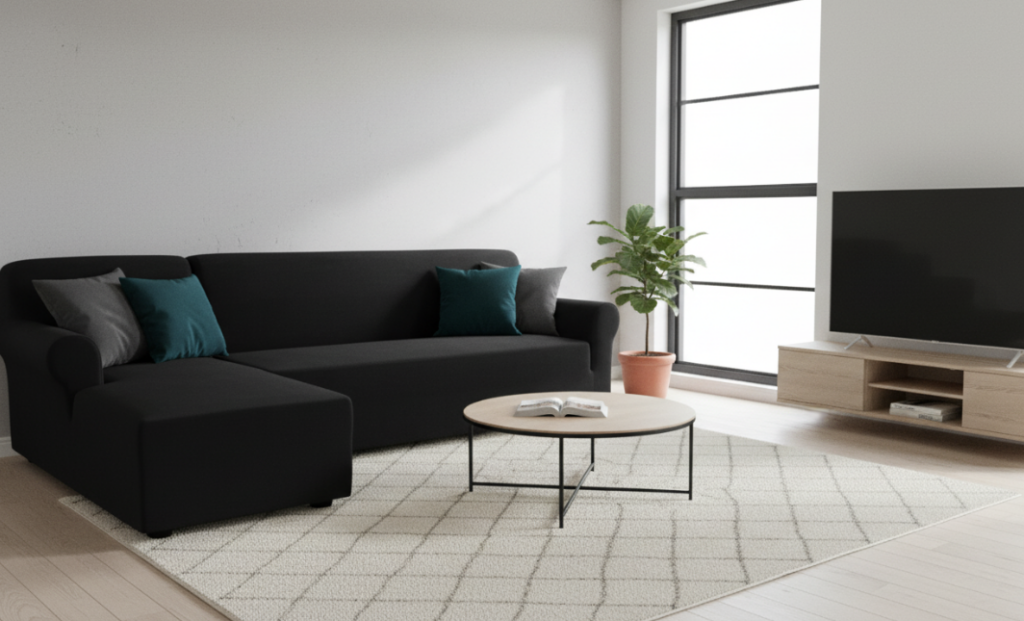
The reason why people hesitate to add covers to leather sofas is mainly because the leather surface is too smooth and not breathable. It doesn’t have the natural friction to hold onto fabric like a fabric sofa. If you don’t find the right way, put up a cover at will. As soon as someone sits on it, the fabric will immediately shift and pile up.
To address this issue, I suggest focusing on “mechanical anchoring”. Foam strips are absolutely not to be saved; they must be pushed deep into the gap between the backrest and the seat cushion, using the tension created by squeezing to stretch the fabric. To be on the safe side, it’s best to choose a cover with silicone particles or rubber anti-slip spots on the back so the fabric can really “grab” on the leather side.
Material Selection Options For Peeling And Cracking
If your sofa has started to shed or crack, the thickness of the fabric directly determines the texture that will come out last.
- Microfiber vs. Velvet: They are heavy-duty fabrics in their own right, with a fine weave that acts as a great visual barrier. What’s more, their backs feel more friction-inducing than that silky fabric.
- Why Avoid Thin Materials For lightweight cotton or polyester blends, there is often a “telegraphing” effect——, that is, the cracked shape of the leather underneath will be clearly printed on the cloth. To get that fancy center effect, your material has to have enough “portion size” to hold up a flat profile.
Installation Tips For A “Tailored” Feel
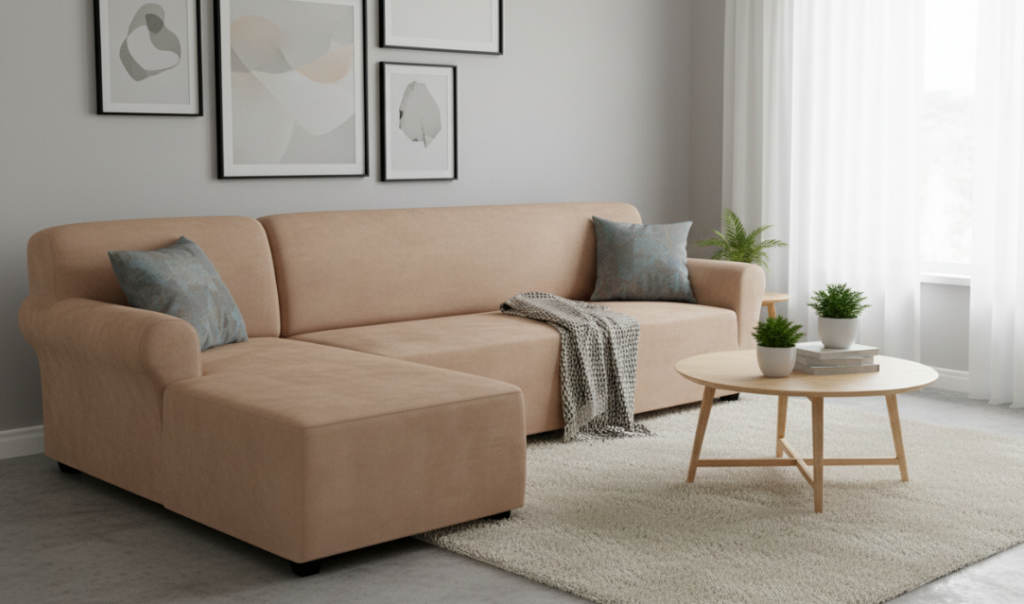
That baggy, sack-like cover just makes the living room look messier. In terms of construction details, the installation process is actually as important as the product selection itself.
- High-stretch sofa cover: Be sure to choose a material with a high spandex content. This “memory fabric” fits snugly along the curve of the leather sofa, mimicking the lines of the original foreskin.
- Tucking Technique: Don’t just put the cloth on. You’re going to cram all that extra fabric into the deep seams of the frame little by little. This step is to outline the defined corners of the sofa and keep the cushion position flat.
- Locking the frame: Once tucked in, the foam strips just mentioned come in handy, they snap the fabric like a “lock”. This way, even if the family sits on it and twists and turns, the fabric will not pop out.
Enhance The Overall Style With Softwear
Functionality does not mean sacrificing aesthetics. Even if your sofa cover is already tucked in, I still recommend putting a designer throw blanket on it. This has two benefits: one is to add visual depth and texture, and the other is to use the weight of the throw blanket itself to further press down on the cushion position.
This combination of “high elastic base + layered fabric” can make others feel that your sofa is carefully designed, rather than just a random cover to “cover up”. By focusing on friction and fabric thickness, you can turn a headache of home wear and tear into a successful sustainable design that can give old furniture a new lease of life without spending a fortune on re-foreskin.
Author: Julianne Brooks
I specialize in sustainable home styling and cost-effective furniture restoration. My design philosophy focuses on blending aesthetic appeal with real-world functionality. Throughout my career, I’ve helped hundreds of homeowners breathe new life into worn-out pieces, mastering the technical nuances of materials like leather to create beautiful, livable spaces without the high cost of replacement.