 admin
admin


How To Change Sofa Cover At Home
In fact, the core logic is not complicated: first find the “Back” on the high-elastic sofa cover, mark the position, and put it down evenly along the backrest; then pull the fabric over the armrests on both sides and cover the seat cushion directly down. For that custom feel of a tight fit, you must align the patchwork seams with the original edge contours of the sofa. In my experience, the deadliest step is to cram excess fabric into the gaps between the seats and armrests, then immediately press into the non-slip foam strips (or foam tubes) to lock the fabric in place. As a final step, go under the sofa and tie the elastic band or drawstring tightly. This simple process means that no matter how much you mess around with it every day, the sofa cover will stay firmly on the furniture.
If you happen to have a high-end product line of our Boqian Textile, it will be much easier to get this done. We lowered the installation threshold to the lowest level by improving the layout from the beginning of product design. Below I will break down the logic I just mentioned in detail and teach you step by step to achieve that professional level of flatness.
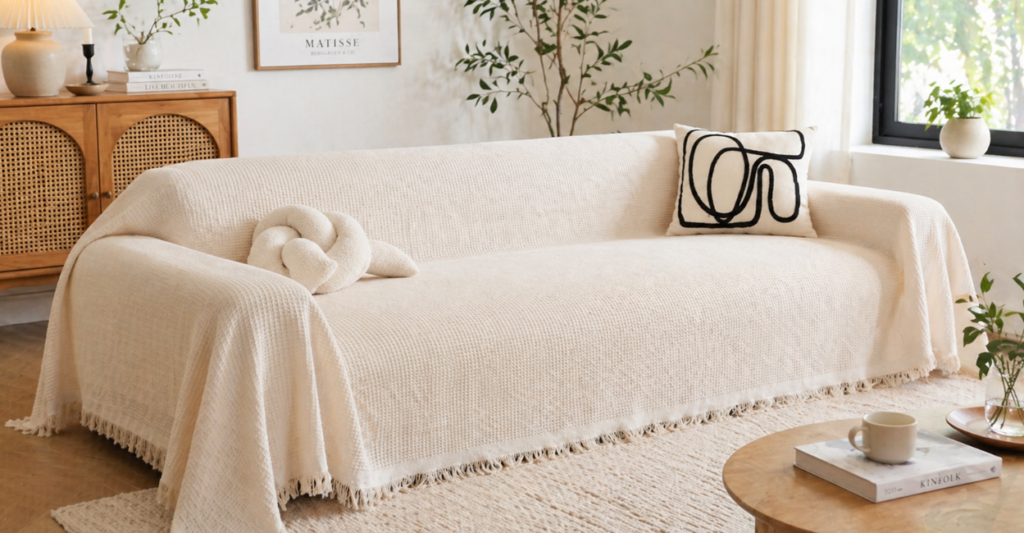
Step 1: Find The “Back” Tab And Set The Backrest
The basis of any flat clothing is to find the right direction. Unfold your high-elastic sofa cover and first look for the “Back” washmark on the inside hem. Once you find it, position it directly on top of the back of the sofa. Then roll the fabric down evenly along the entire backrest, taking care to keep the left and right sides symmetrical. When making these covers, our Boqian Textile specially made this intuitive label design so that everyone does not have to guess the pros and cons at first.
Step 2: Stretch Strongly To Cover The Armrests And Cushions
Once the backrest is straightened, turn to the front of the sofa. Grab the high-elastic fabric and apply it firmly to the armrests on both sides. Don’t feel bad at this time. Since it is made of high-elastic material, its weight and weaving method mean that you can feel free to pull boldly without worrying about tearing. After wrapping the armrests tightly, pull the fabric down and cover the front end of the cushion until the entire sofa is covered by the cover.
Step 3: Straighten The Alignment To Fit The Natural Contour Of The Sofa
If you want it to look like a custom model that you paid a lot of money to have someone re-wrap it, you have to take advantage of the cropping details of the pattern. Stop a little at this point and carefully adjust the fabric so that the patchwork seam line of the sofa cover just clicks onto the natural edges of the armrests and cushions. By straightening out large areas and aligning the stitches, the cover won’t look bulky or go off.
Step 4: Stuffing The Remaining Material And Pressing The Foam Strip
Many people complain that the sofa cover is old, slippery and wrinkled, but this step is often not done properly. First, you can directly use your hands to stuff all the excess fabric into the deep seams where the seat cushion meets the backrest and armrests.
Then, immediately follow the anti-slip foam strips you prepared along the area where you just stuffed the fabric and press them hard into the gap. From a mechanical point of view, these foam strips act as a “physical lock”. They can create enough surface tension in the seating area to stretch the high-elastic fabric tightly, ensuring that the fabric will not shift or shrink into a ball when you sit up or turn over on the sofa.
Step 5: Secure The Elastic Band Or Drawstring At The Bottom
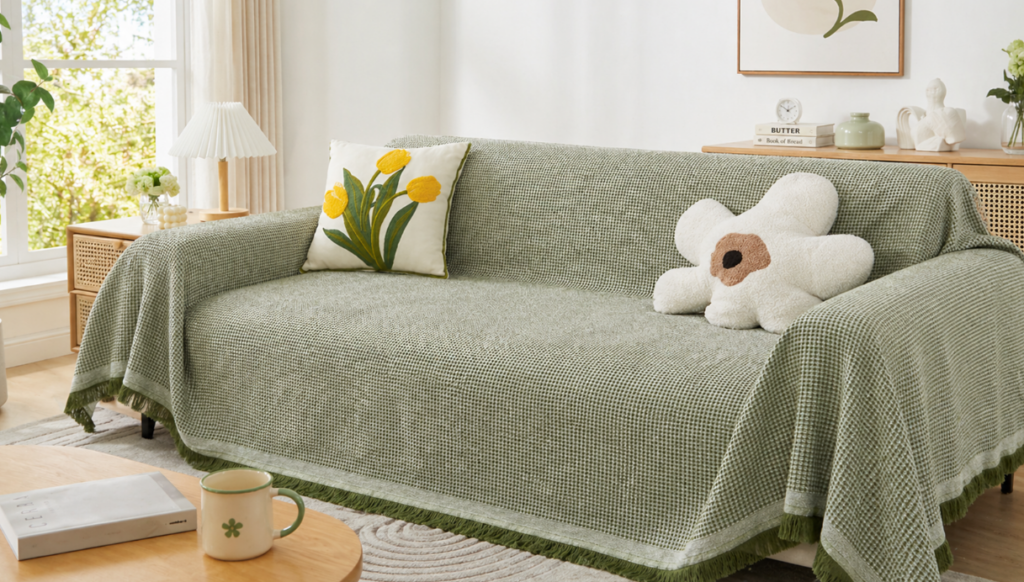
Finally, close the tail to ensure that this operation can be completely stabilized in daily high-frequency use. Reach out and feel the bottom of the sofa (if you find it too troublesome, you can tilt the sofa back slightly) to find the bottom fixings. Depending on which design of Boqian Textile you buy, it will usually be equipped with an elastic band or drawstring. Tie these straps with dead knots directly under the frame, or pull the drawstring all the way down. This method of applying anchoring force from the bottom up can directly force a 360-degree wrapping feeling without blind spots, properly protecting the furniture.
Author: Alex Chen
I’m a product designer and quality tester. With years of experience working directly with high-elastic fabrics, my goal is to make home styling effortless for everyone. During our internal product development, I focus on perfecting those small design details—like our intuitive “Back” tags and seam placements—to lower the installation threshold. I wrote this guide to share my personal tips and tricks, helping you give your sofa the perfect “bone correction” for a flawless, custom fit!